Beezz Fryer
Choosing a modern air fryer can feel surprisingly complicated. Glossy screens and bold cooking promises often distract from practical details. A reliable model should make daily meals easier, not create another demanding appliance.
So, what features should you look for in a modern air fryer? Start with accurate temperature control, useful capacity, and a basket that cooks food evenly. A family may need a larger drawer, while one person may prefer a compact design. Consider the foods you actually prepare. Crisp chicken skin, roasted vegetables, and reheated pizza each reveal different strengths. Adjustable airflow matters. So does fast preheating.
Safety and maintenance deserve equal attention. Look for a cool-touch handle, stable feet, clear controls, and automatic shutoff. Dishwasher-safe parts can save time, but manufacturers’ instructions should still guide cleaning. Grease buildup can affect airflow and cooking results. A quiet fan is pleasant, although noise levels are rarely presented consistently across brands.
Smart functions may offer reminders, recipes, or remote control. They are convenient, but they should not replace dependable heating performance. Independent reviews, warranty terms, and recognized safety certifications provide stronger evidence than advertising alone. I would also check whether replacement baskets and trays are available. Small details matter later.
There is no perfect air fryer. A large model may cook more food, yet occupy valuable counter space. A digital display may look modern, but simple knobs can be easier to use. Compare real needs, measured performance, and long-term care before choosing. The best appliance is the one you will confidently use several times each week.
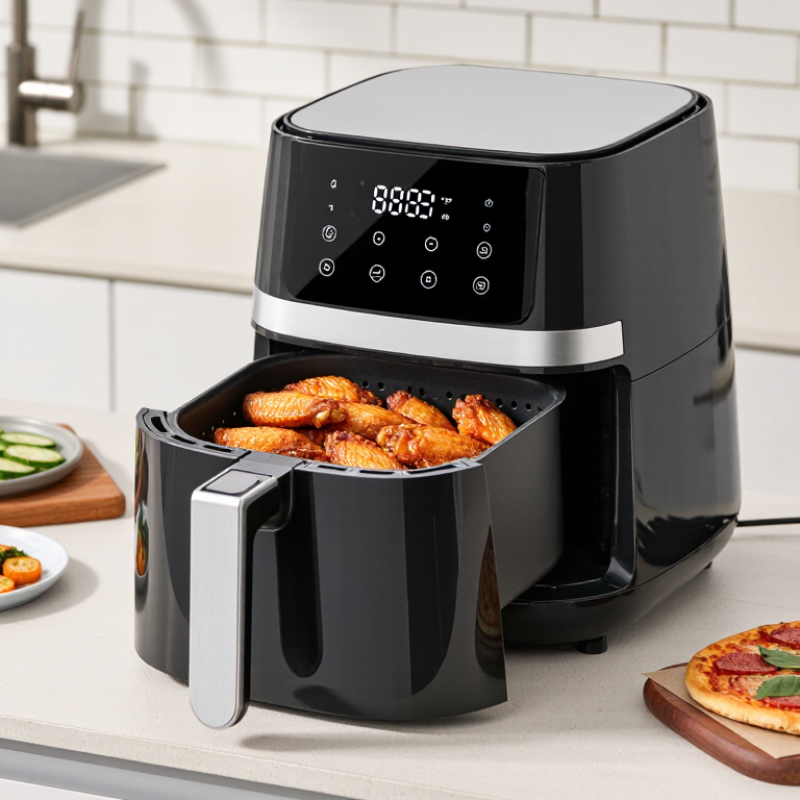
A modern air fryer is a compact convection oven with a powerful fan. A heating element warms the air above the cooking chamber. The fan then pushes that heat rapidly around the food. This moving air dries the surface and encourages browning. It does not technically fry food in a deep pool of oil.
The perforated basket is important. Its openings let hot air reach more surfaces, including the underside. Overcrowding blocks circulation and can leave the center soft. A small amount of oil improves browning, but too much may create smoke. In practice, shaking vegetables halfway through cooking often produces more even color. I once trusted the preset controls too much. The outside browned while the thicker pieces remained firm.
Temperature control also matters. Some models cycle the heater on and off, so the actual temperature may vary. A reliable unit should respond smoothly when food is added. Look for clear controls, a useful temperature range, and a basket that is easy to remove. A viewing window can help, but it may lose heat when opened repeatedly. Removable, dishwasher-safe parts reduce cleaning time, although hand washing can protect nonstick surfaces. Noise is another practical detail. A strong fan is useful, but it should not sound harsh or unstable. There is no perfect setting for every food. Frozen snacks, fresh vegetables, and raw chicken release moisture differently, so cooking times still require judgment.
Choosing a modern air fryer starts with cooking performance, not a crowded control panel. Look for adjustable temperature, steady airflow, and a basket that leaves food uncovered. These features affect browning, crispness, and cooking consistency. A 2023 report from the NPD Group found that convenience remains a major reason consumers use countertop cooking appliances. However, convenience should not replace control.
Temperature accuracy matters for safety and repeatable results. The USDA Food Safety and Inspection Service recommends 165°F for poultry and leftovers. A reliable air fryer should reach and maintain that temperature without large swings. A food thermometer remains useful. I still check thick chicken pieces, even when the display looks confident. Preset programs can help with timing, but they are not universal recipes. Frozen fries, fresh vegetables, and salmon need different airflow and moisture settings. A pause-and-shake reminder is practical, especially for small pieces. Yet it cannot fix an overcrowded basket.
Tips: Choose a basket with clear capacity guidance, not just a large headline number. A family-sized basket may cook poorly when filled too deeply. Test the usable surface with your usual meal. Check whether the tray removes easily and cleans without narrow grease traps. Independent testing reports from Consumer Reports also highlight consistency and ease of cleaning as important performance measures. Noise deserves attention, too. Manufacturers often omit decibel figures. That omission is worth questioning. Better controls are helpful, but simple controls can be more dependable.
| Cooking Feature | What It Does | Why It Matters | Useful Buying Benchmark | Best For | Priority |
|---|---|---|---|---|---|
| Capacity | Defines how much food can be cooked in one batch. | A larger basket reduces the need to cook several batches, while a smaller unit usually takes up less counter space. | Approximately 2–3 L for one or two people; 4–6 L for small families; 7 L or more for larger portions. | Matching portion size to household needs. | Essential |
| Adjustable Temperature | Allows the user to select the cooking temperature for different foods. | Different ingredients require different heat levels to cook evenly without excessive browning. | A practical range is about 80–200°C, depending on the model. | Vegetables, meat, fish, frozen foods and baked recipes. | Essential |
| Accurate Timer and Automatic Shut-Off | Controls cooking duration and stops heating when the programmed time ends. | Helps prevent overcooking and makes unattended cooking safer, although food should still be monitored. | A clear digital timer with at least 1-minute adjustments and an audible alert. | Busy households and repeatable recipes. | Essential |
| Airflow and Heating Design | Circulates hot air around the food to promote browning and crisping. | Effective airflow can improve texture and reduce the need for added oil, but food placement remains important. | Look for a well-ventilated basket and enough space around food for air circulation. | Crisp fries, roasted vegetables, chicken and reheated foods. | Essential |
| Preset Cooking Programs | Provides preselected time and temperature settings for common food categories. | Presets simplify operation, but manual controls are still important because cooking times vary by quantity and food thickness. | Useful presets may include air fry, roast, bake, reheat and dehydrate. | Beginners and quick everyday meals. | Helpful |
| Shake or Stir Reminder | Alerts the user to shake the basket or turn food during cooking. | Redistributing food helps promote more even browning, particularly for small pieces and frozen foods. | A reminder that activates partway through the cooking cycle. | Fries, nuggets, vegetables and bite-sized foods. | Helpful |
| Basket and Tray Design | Determines how food is arranged, lifted and removed from the cooking chamber. | A removable, perforated tray improves airflow and makes it easier to separate food from excess fat or moisture. | Choose a stable basket with a comfortable handle and a removable cooking plate. | Frequent cooking and easier food handling. | Essential |
| Nonstick, Dishwasher-Safe Parts | Makes the basket and tray easier to clean after cooking. | Simple cleanup encourages regular use and helps remove oil residue and food particles. | Look for clearly identified dishwasher-safe removable parts and avoid abrasive utensils. | Daily cooking and households seeking low-maintenance appliances. | Essential |
| Dual-Zone or Multi-Basket Cooking | Allows different foods to cook at separate settings or at the same time. | It can coordinate a main dish and side dish, but the appliance is usually wider and may use more counter space. | Choose separate temperature and timer controls for each cooking zone. | Families and complete meals prepared simultaneously. | Helpful |
| Cooking Modes Beyond Air Frying | May include roasting, baking, reheating, broiling or dehydrating functions. | Multiple modes can replace some uses of a small oven, provided the chamber size suits the recipe. | Select only the modes that match your regular cooking habits. | Users who want one appliance for several tasks. | Helpful |
| Viewing Window or Interior Light | Allows the cooking progress to be checked without fully opening the basket or door. | Checking food can reduce unnecessary heat loss, although opening a basket briefly is generally practical. | A clear, easy-to-clean window and a light that can be switched on independently. | Foods that require visual monitoring. | Optional |
| Noise Level | Reflects the sound produced by the fan and heating system during operation. | A quieter appliance is more comfortable in open-plan kitchens, especially during longer cooking cycles. | Check independent measurements or user reports; fan noise varies by design and cooking mode. | Small apartments and shared living spaces. | Helpful |
| Safety Features | May include cool-touch handles, overheating protection, non-slip feet and basket detection. | These features reduce common handling and operational risks, but safe placement and supervision remain necessary. | Look for stable feet, insulated handles and protection against overheating. | All users, particularly households with children. | Essential |
| Power and Preheating Behavior | Influences how quickly the appliance reaches the selected temperature and cooks food. | Higher power may shorten cooking time, but results also depend on capacity, food quantity and airflow. | Many household models use roughly 1,200–2,000 W; compare this with the available electrical outlet. | Fast weeknight cooking and larger baskets. | Helpful |
| Controls and Display | Provides the interface for adjusting temperature, time and cooking programs. | Clear controls reduce setup errors and make frequently used settings easier to repeat. | Prefer readable labels, responsive buttons or dials, and a display visible from the normal operating position. | Frequent users and people who value simple operation. | Essential |
Choosing a modern air fryer starts with your kitchen, not its display or cooking presets. Measure the counter depth, width, and height beneath cabinets. Leave space around the vents for safe airflow. A compact model suits one or two people, while a larger unit helps families cook complete portions. However, bigger does not always mean better. It may occupy valuable workspace and feel awkward to lift.
Capacity labels can be misleading. Check the usable basket space, not only the advertised volume. A shallow basket may cook vegetables evenly but struggle with thick chicken pieces. A two-layer rack increases capacity, yet crowded food can turn soft instead of crisp.
From my own kitchen experience, cooking in two smaller batches sometimes produces better results. It also takes more time. That trade-off deserves honest consideration.
Tips:
Measure your storage area with the basket fully removed. Check whether the plug reaches a suitable outlet without stretching. Consider the weight if you plan to store the appliance after every use. Test the basket handle with one hand. Small details matter. I once chose a model that fit the counter but blocked a cabinet door. It worked, but the arrangement was frustrating and needed daily adjustment. Clearance, cleaning space, and realistic serving sizes should guide the final choice.
Choosing a modern air fryer becomes easier when you test the controls, presets, and smart functions in real cooking situations. A clear digital panel should respond quickly, even with damp fingers. Physical dials can feel more dependable, but they offer less precision. I prefer controls that adjust temperature in small steps and show the remaining cooking time clearly.
Presets are useful for frozen fries, vegetables, chicken, and reheating leftovers. However, they are starting points, not cooking laws. A preset may leave thick chicken undercooked or make thin vegetables too dry. I check food halfway through and use a thermometer for meat. That small habit improves reliability. The included presets should also be easy to edit, because fixed programs can become frustrating.
Smart functions can save time, especially when they send a completion alert or remember a preferred setting. Voice control sounds convenient, but it may be unnecessary for a countertop appliance. In my testing, wireless setup was sometimes slower than expected. The connection failed once.
Look for an app with simple instructions, readable cooking records, and useful notifications. Avoid paying extra for features you will rarely use. A strong air fryer should still work well manually when the internet, phone, or app is unavailable. I am not fully convinced every smart feature improves cooking, but responsive controls and accurate temperature feedback matter every day.
A modern air fryer should be judged beyond crisp results. Safety deserves careful attention. The National Fire Protection Association reported that cooking equipment caused 44% of U.S. home structure fires from 2017 to 2021. Choose stable feet, insulated handles, automatic shutoff, and clear ventilation space. Check for recognized electrical safety certification. Do not guess.
Cleaning affects daily safety. Removable parts should have smooth surfaces and few narrow seams. Dishwasher suitability helps, but it does not replace inspection. I once overlooked grease around a heating area; the odor returned during the next cooking cycle. Wipe the chamber only when completely cool. Avoid abrasive tools that damage protective coatings. Small details matter.
Durability requires practical evidence. Look for a firmly closing drawer, strong hinges, readable controls, and replaceable high-wear parts. A long warranty is useful, but repair support matters more. Energy use also depends on portion size and cooking time. The U.S. Energy Information Administration’s 2020 Residential Energy Consumption Survey identified cooking as roughly 4% of household energy use. Independent testing reported by Which? found that compact air fryers often used less electricity than full-size ovens for small portions. Results vary with temperature, preheating, and batch size. Compare wattage and actual cooking minutes, not wattage alone. A cheaper appliance can become wasteful if its basket warps quickly.
Focus on adjustable temperature, steady airflow, and an open cooking surface. These features support browning and crispness. A crowded control panel cannot replace reliable cooking.
Stable heat supports safer, more repeatable meals. Poultry and leftovers should reach 165°F internally. I still check thick chicken with a food thermometer.
Presets are useful starting points, not universal recipes. Frozen fries, fresh vegetables, and salmon need different cooking adjustments. Check food halfway through.
Read the usable capacity, not only the advertised headline number. Food should sit mostly uncovered. A deep pile may cook unevenly, even inside a large basket.
Test the cooking surface with a usual meal. The tray should remove easily and avoid narrow grease traps. Small cleaning problems become annoying quickly.
They help move small pieces during cooking. The reminder cannot correct an overcrowded basket. Fries still need room for airflow.
Clear displays should respond quickly, even with slightly damp fingers. Small temperature adjustments and visible remaining time are valuable. Simple controls may be more dependable.
Alerts and saved settings can save time. However, wireless setup may fail or take longer than expected. The appliance should work well without a phone, app, or internet connection.
Noise deserves attention because many product descriptions omit sound levels. Listen during operation if possible. I would question any missing information, though noise alone does not decide everything.
Modern air fryers use powerful circulating hot air to create crisp textures with little or no added oil, making them a practical choice for everyday cooking. When deciding what features should you look for in a modern air fryer, focus on adjustable temperature and cooking time, even heat distribution, useful cooking modes, and enough capacity for your household. A compact model may suit a small kitchen, while a larger basket or dual cooking area can help prepare complete meals more efficiently.
Clear digital controls, reliable presets, and optional smart functions can make cooking simpler, but ease of use should remain the priority. Safety features such as automatic shutoff, cool-touch surfaces, and stable construction are also important. Consider whether the basket and accessories are easy to remove and clean, and choose a durable design that fits your counter space. Finally, efficient heating and reasonable power consumption can support convenient cooking without unnecessary energy use.
