Choosing the right accessories can make an air fryer more useful, but not every small pan belongs inside its basket. This guide explores what accessories can be used in an air fryer, from perforated baking trays and silicone cups to grill racks, skewers, and heat-resistant tongs. Each item should fit comfortably, allow hot air to circulate, and withstand the appliance’s maximum temperature.
Meredith Laurence, author of several air-fryer cookbooks, describes the appliance as “a small convection oven that cooks food quickly with circulating hot air.” That simple comparison explains why accessory design matters. A solid dish may hold cake batter securely, yet block airflow beneath the food. A wire rack can create crisp layers, but it may also make cleaning harder. Small details matter.
Look for accessories made from food-safe, heat-resistant materials. Avoid pieces with loose coatings, unknown plastics, or handles that touch the heating element. Always check the manufacturer’s instructions before using foil, parchment, baking molds, or third-party kits. Even experienced cooks sometimes overfill a basket or forget that accessories reduce cooking space. I have made that mistake.
The sections ahead will connect each accessory with practical uses, suitable foods, and common limitations. You will see how a silicone muffin cup behaves differently from a metal pan, and why a rack can change browning. Some recommendations may depend on your air fryer’s shape. Measure twice. Cook carefully.
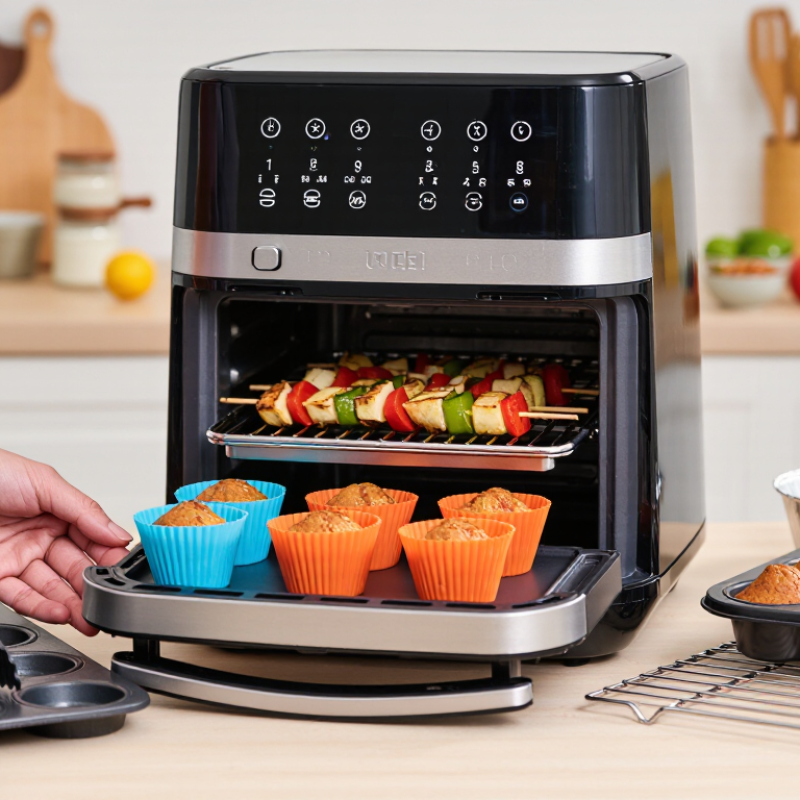
Air Fryer Accessories: Purpose, Materials, and Compatibility
Air fryer accessories work best when their purpose matches the basket’s airflow. A perforated metal rack lifts food above drippings and helps hot air reach its underside. A solid, oven-safe dish suits sauces or batters, but it can slow browning. Silicone liners are flexible and easy to clean; use them only when they fit without covering the basket’s air openings. Parchment should be weighed down by food, not placed loose near the heating element. Small detail, big difference.
Material and fit matter more than a long accessory list. Stainless steel and heat-rated silicone are common choices, but check the appliance manual for temperature limits and prohibited materials. Avoid plastic items unless explicitly rated for the appliance’s cooking temperature. The U.S. Department of Agriculture’s Food Safety and Inspection Service recommends cooking poultry to 165°F (74°C), so a compatible, readable food thermometer is more useful than guessing from browned surfaces. Accessories can also change cooking time; crowded baskets and deep dishes may need extra time. There is no universal fit, even when two baskets look nearly identical. Measure the interior, leave room around the food, and inspect accessories for warping or damaged coatings. One easy mistake: buying a liner before checking the basket shape.
Essential Accessories for Cooking Different Types of Food
What Accessories Can You Use in an Air Fryer?
Essential Accessories for Cooking Different Types of Food
The right accessory changes how evenly food cooks. A perforated basket suits fries, wings, and vegetables. Its holes allow hot air to circulate around small pieces. A wire rack creates a second level for toast, skewers, or thin meat slices. Avoid crowding. Air needs space.
Use a small oven-safe dish for eggs, casseroles, and saucy foods. Silicone cups help shape muffins and individual desserts. A grill plate works well for steaks, fish, and sliced vegetables. However, thick plates may slow cooking. I learned this after producing pale vegetables beneath a heavy accessory. It looked convenient, but airflow suffered.
Tips: Check the accessory’s heat rating before use. The FDA Food Code 2022 recommends 165°F for poultry and stuffed foods. Use a food thermometer, not color alone. USDA Food Safety and Inspection Service guidance supports the same temperature standard. For fish, the FDA lists 145°F as a safe minimum internal temperature. A rack can separate delicate fish from direct heat. Parchment liners reduce sticking, but they should remain weighted by food. Loose paper can touch the heating element. Clean grease from racks after each use. Small details matter.
How to Choose Safe and Suitable Air Fryer Accessories
Choose air fryer accessories by checking fit, heat resistance, and airflow—not appearance alone. Measure the basket before buying a liner or rack. Leave space around the food so hot air can circulate; a sheet that covers every vent may cause uneven cooking. Use accessories labeled for food contact and rated for your appliance’s maximum temperature. Silicone and metal can be suitable, but only when the product’s instructions allow them. Avoid plastic, unknown coatings, and loose parchment that could lift toward the heating element. The U.S. Fire Administration reports that cooking caused about 49% of reported home fires in 2017–2021. That figure covers all cooking equipment, not air fryers specifically, but it reinforces the value of careful use.
Tips: Check your manual first. Secure lightweight parchment beneath food, and never preheat with it loose. Stop if an accessory bends, smells, or sheds coating. A snug fit is useful; too snug is not. I’ve found that even a small rack can crowd a compact basket, so test it with a single batch before relying on it.
Wash accessories according to their care instructions, and inspect seams and surfaces for damage. A scratched coating or warped tray may be a reason to replace it. Don’t assume “oven-safe” means suitable for every air fryer: temperatures, basket shapes, and heating-element positions differ. When product details are unclear, skip it. The slightly inconvenient choice is often the safer one.
Using Accessories Correctly for Better Cooking Results
A perforated basket or rack helps hot air reach more of the food’s surface. Use it for fries, vegetables, or small pieces of chicken, but leave gaps between them. Crowding traps steam and can leave damp patches. A small, oven-safe metal pan works well for eggs or a quick cake; check that it fits without blocking the air vents. Silicone cups can hold muffins or sticky marinades, provided they are rated for the appliance’s heat. Not every “oven-safe” accessory suits every air fryer. Check the manual, and keep paper liners weighed down by food so they cannot lift toward the heating element.
Accessories change airflow, so cooking times may shift. Check food early, turn or shake it when appropriate, and use a food thermometer for meat rather than trusting browned edges. The USDA’s Safe Minimum Internal Temperature Chart recommends 165°F (74°C) for poultry and leftovers. That is a useful target, not a guess. Avoid filling a pan deeply; the center may cook more slowly than the surface. Wash reusable liners and racks after greasy meals, and inspect them for loose coatings or damage. I still sometimes reach for the wrong-sized dish. It fits, technically, but leaves little room for air. A smaller pan often cooks better.
Cleaning, Maintaining, and Replacing Air Fryer Accessories
Air fryer accessories need regular cleaning because grease can collect around seams and perforations. Let each piece cool before washing. Soak a basket or rack in warm, soapy water, then use a soft sponge to loosen stuck-on food. Avoid harsh scouring pads, which may damage nonstick coatings. Dry accessories fully before putting them away; trapped moisture can lead to odors.
Check accessories after cleaning. Look for peeling coatings, bent edges, loose handles, or cracks in silicone. Small scratches may not seem serious, but deep damage can make a piece harder to clean. Replace it if the coating flakes or the structure no longer sits securely in the fryer. I once kept a slightly warped tray too long. It wobbled, and the food cooked unevenly.
Use only accessories labeled as suitable for air fryer temperatures, and follow the appliance’s care instructions. A quick inspection before cooking helps catch loose parts or crumbs near heating elements. Don’t assume every oven-safe item will fit or work well in an air fryer; airflow needs room. That detail is easy to miss. Keep accessories dry and stacked carefully, since nesting heavy pieces can scratch their surfaces.
Air Fryer Accessory Care Checklist
The bars count practical care actions listed for each stage. Check your appliance and accessory instructions, since cleaning and replacement guidance can vary by material and model.
FAQS
It lifts food above drippings and lets hot air reach the underside. Leave space around the food.
Use one for sauces or batters. It may slow browning, so check the food during cooking.
Measure the basket first. The liner should fit without blocking air openings.
Keep it under food so it cannot lift toward the heating element. Never preheat with loose parchment.
Heat-rated silicone and metal may work when the manual allows them. Avoid plastic unless it is explicitly rated for the cooking temperature.
No. Basket shapes and heating-element positions vary. A tray can fit poorly, even if it looks close.
Read the manual and product instructions. Stop using it if it warps, smells, or sheds coating.
They can. Crowded baskets and deep dishes may need extra time. Check doneness instead of relying only on browned surfaces.
Cook poultry to 165°F (74°C), measured with a food thermometer. Browning alone can be misleading.
Buying a liner before checking the basket’s shape. Measure first; a snug fit is not always a good fit.
Conclusion
This guide explains what accessories can be used in an air fryer and how they can help prepare a wider range of foods. Depending on the appliance’s design and available space, useful options may include heat-safe baking dishes, racks, skewers, liners, and silicone or metal cookware. Each accessory serves a different purpose, from separating ingredients and improving airflow to containing sauces or supporting baked dishes. Choosing the right material and size is essential: accessories should be heat-resistant, fit without blocking circulation, and be approved for use in the appliance.
For better results, place accessories securely, leave room for hot air to move, and follow the appliance’s instructions for temperature and cooking time. Avoid overfilling, and use suitable tools when handling hot items. After cooking, clean accessories according to their material, check them regularly for damage or wear, and replace items that become warped, cracked, or otherwise unsuitable. Proper selection, use, and care can support safer cooking and more consistent results.
 Beezz Fryer
