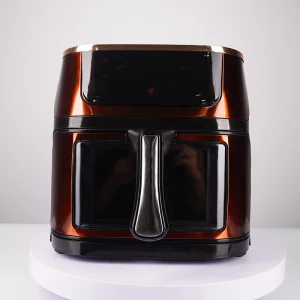
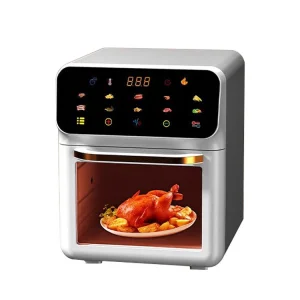
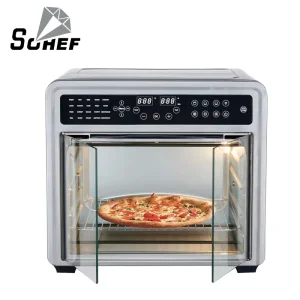
Beezz Fryer
Beezz Fryer
Beezz Fryer
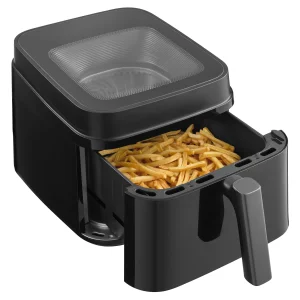
Engineered for maximum thermal convection, dynamic air path velocity, and minimized power consumption.
The global household and commercial cooking sectors are witnessing a historic transformation. Driven by stringent environmental guidelines—such as the European Union’s Ecodesign Directive (ERP) and the United States’ Energy Star benchmarks—importers, brand owners, and appliance distributors no longer look at air fryers solely as "healthy frying tools." Today, the core metric of competitive superiority has shifted to thermal conversion efficiency and standby power minimization.
Traditional heating elements lose up to 30% of their heat through poor structural insulation and unstructured laminar airflow patterns. Top-tier factories have redesigned air circulation pathways using advanced CFD (Computational Fluid Dynamics) simulations. These advancements ensure that high-velocity hot air is directed precisely onto the food surface, reducing cooking times by up to 40% and lowering overall electrical draw from 1800W to a highly optimized 1200W or 1450W without sacrificing crispiness.
By shaping internal cavities to guide cyclonic airflow, energy consumption is directly lowered by reducing heat stagnation zones.
Next-generation microcontroller units (MCUs) drop idle power consumption below 0.5W, satisfying the strictest EU ErP Lot 6 regulations.
Integrating high-temperature-grade recycled plastics and premium structural stainless steel to lower overall Scope 3 emissions.
For B2B buyers—ranging from large-scale supermarket chains in Europe to digital DTC brands in North America—the procurement landscape requires strict risk management. Electricity tariffs in European metropolitan areas have driven consumers to favor energy-efficient countertop cooking over traditional, energy-heavy built-in electric ovens. In response, modern supply chains are actively seeking factories that integrate intelligent energy management algorithms directly into appliance hardware.
When selecting a top-tier energy-saving air fryer manufacturer, purchasing departments focus on three primary operational indicators:
Understanding the exact science of power conservation in modern air fryers requires examining the electrical and thermodynamic layout of the heating loop. As shown below, certified energy-saving models combine structural insulation, high-density elements, and intelligent duty-cycle modulation.
Q = h * A * (T_solid - T_fluid)
Where:
- Q = Heat transfer rate (higher Q means faster cooking and lower energy usage)
- h = Convective heat transfer coefficient (enhanced by high RPM brushless DC fan motors)
- A = Total surface area of food exposed to cyclonic heat
- T = Temperature gradient between the heating coil and the interior air mass
By switching from AC shaded-pole motors to variable-speed Brushless DC (BLDC) motors, top suppliers can increase the convective coefficient (h) while saving up to 15W on the motor circuit alone, translating to thousands of kilowatt-hours saved over a typical commercial product lifespan.
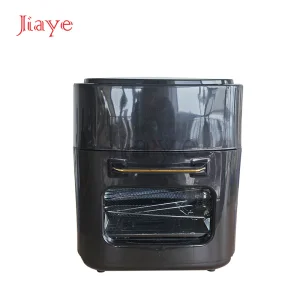
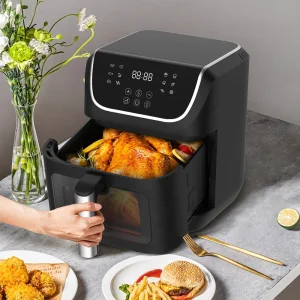
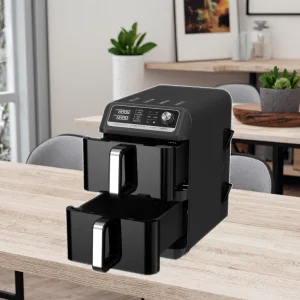
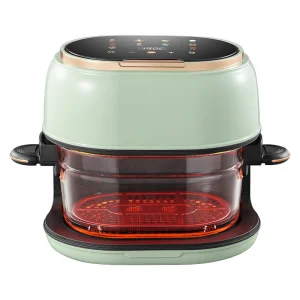
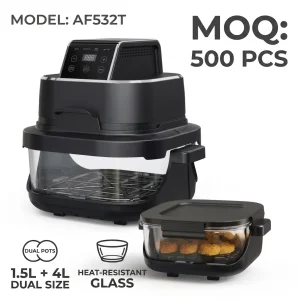
Intelligent features, glass liners, dual-basket controls, and heavy-duty commercial kitchen ovens.
When procuring cooking appliances at scale, safety and compliance certifications are critical. Factories must maintain up-to-date documentation that meets global standards. A quality-focused manufacturing facility should operate under strict regulatory compliance frameworks, including:
| Market Region | Required Certification | Safety Focus Areas |
|---|---|---|
| European Union | CE, GS, RoHS, LFGB | Electromagnetic compatibility, chemical safety of food contact components (silicone/glass/metals). |
| North America | ETL, UL, FDA, FCC | Thermal fire prevention, reliable auto-off mechanisms, non-toxic PTFE/PFAS coatings. |
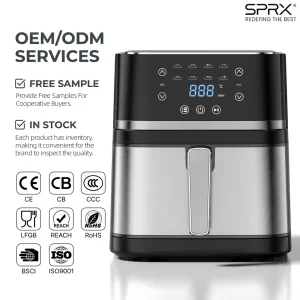
| Global Markets | CB Scheme, BSCI, ISO 9001 | Ethical labor practices, strict component traceability, and high production line repeatability. |
Furthermore, standard air fryers are moving away from traditional PTFE (Teflon) coatings. Industry-leading factories now offer alternatives like aluminized steel baskets with ceramic non-stick coatings and borosilicate glass baskets. These materials are inherently free of BPA, PFOA, and genX chemicals, making them easier to clean and highly resistant to thermal stress under prolonged high-temperature conditions.
As the smart home ecosystem evolves, air fryers are becoming connected, energy-aware appliances. Manufacturers are focusing their R&D efforts on these upcoming technologies:
Future smart air fryers will be designed to interact directly with Home Energy Management Systems (HEMS). Using Zigbee or Matter protocol Wi-Fi modules, the appliance can adjust its power output down by 10-15% during peak energy tariff hours without affecting cooking times, thanks to optimized heat retention within the sealed chamber.
By combining traditional resistance coil heaters with halogen infrared emitters, factories can reduce preheating times to zero. The infrared light penetrates food instantly to kickstart internal heating, while the convection air circulation crisps the exterior, reducing total energy use per cooking cycle by up to 25%.
Instead of relying on fixed cooking presets, built-in weight sensors and moisture detectors measure the exact food volume in the basket. The system then automatically calculates the shortest heating path and adjusts the duty cycle, preventing energy waste from overcooking.
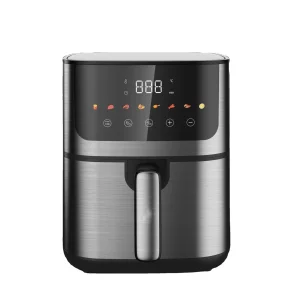
Dongguan Beezz Fryer Co., Ltd. is a leading China stainless steel air fryer manufacturer and smart kitchen appliance supplier, specializing in the design, development, and production of innovative cooking solutions for global markets. With years of manufacturing experience and a strong commitment to quality, Beezz Fryer provides reliable, energy-efficient, and user-friendly kitchen appliances for household and commercial applications.
Our product portfolio includes stainless steel air fryers, digital air fryers, smart WiFi air fryers, dual basket air fryers, air fryer ovens, multifunction cooking appliances, and customized kitchen solutions. Designed to meet the evolving needs of modern consumers, our products combine advanced heating technology, intelligent controls, and stylish designs to deliver healthier and more convenient cooking experiences.
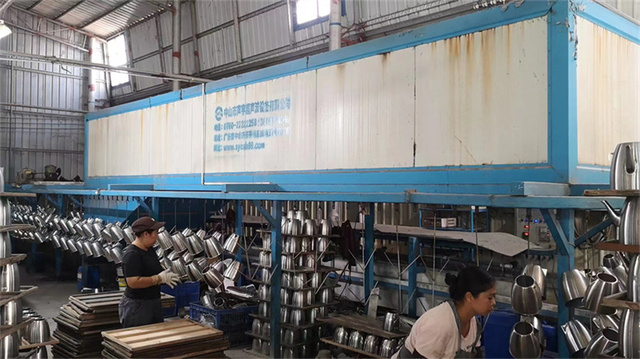
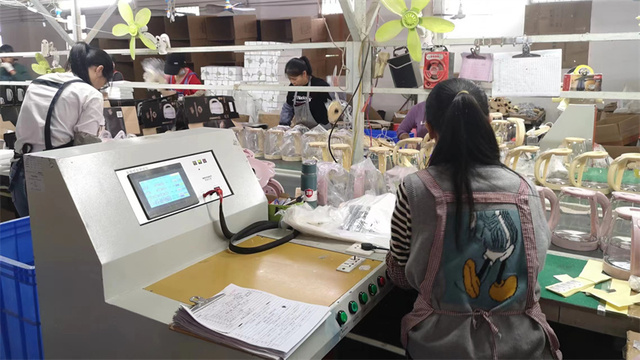
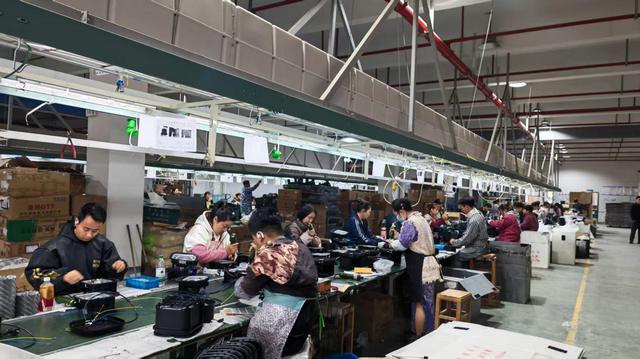
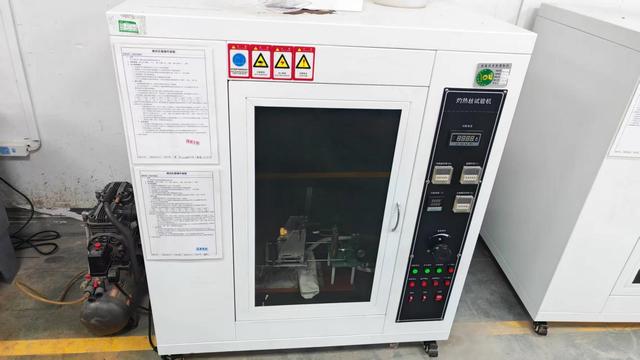
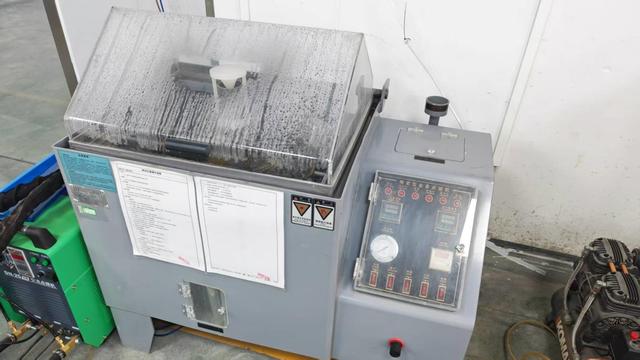
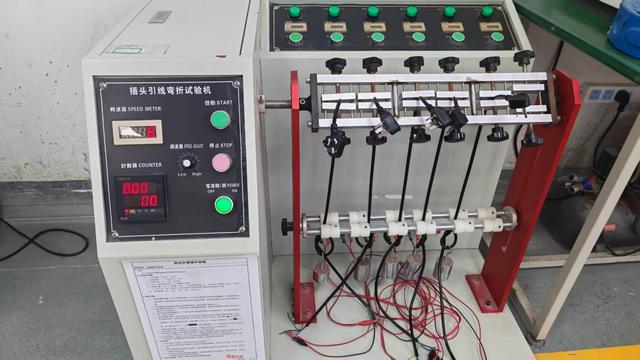
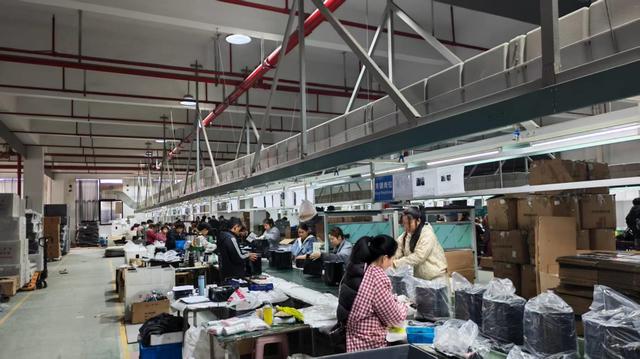
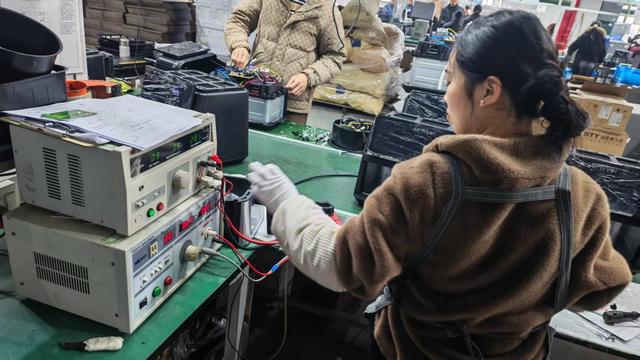
Located in Dongguan, China, our manufacturing facility is equipped with advanced production lines, precision testing equipment, and strict quality management systems. Every product undergoes comprehensive inspections to ensure excellent performance, durability, and safety. We implement rigorous quality control procedures throughout the entire production process to guarantee consistent product excellence.
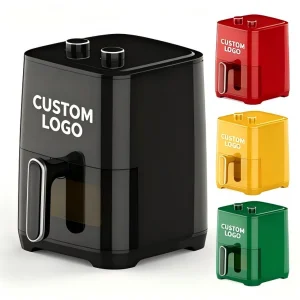
Beezz Fryer is dedicated to providing flexible OEM and ODM services for international brands, wholesalers, distributors, retailers, and e-commerce businesses. Our experienced R&D team works closely with customers to develop customized products tailored to specific market requirements, including appearance design, functionality, packaging, and branding solutions.
Driven by innovation, quality, and customer satisfaction, Dongguan Beezz Fryer Co., Ltd. continues to expand its global presence and strives to become a trusted partner in the smart kitchen appliance industry, delivering high-quality air frying solutions that promote healthier lifestyles worldwide.

A: Energy-saving models use highly efficient carbon fiber or halogen elements paired with advanced airflow circulation. These technologies transfer heat directly through convection, reducing cooking times and energy loss while maintaining precise temperatures via microprocessors.
A: Sourcing cycles generally range from 30 to 45 days. This includes custom branding, packaging design, and full compliance testing. Sample validation is completed within 7 to 14 days, depending on the complexity of the requested features.
A: Yes. All models are manufactured to meet CE, GS, UL, and ETL safety requirements. Baskets and glass liners are LFGB and FDA food-grade certified, ensuring they are free of PFAS, PFOA, and other harmful substances.
A: Yes, we offer flexible shipping options for B2B buyers. You can mix different models (such as 5L, 8L, and 10L visual glass air fryers) in one container to help optimize inventory levels.
A: We maintain strict ISO 9001 quality control standards. Each production line features specialized inspection stations that test electrical insulation, heating element longevity, thermal sensors, and structural integrity before packaging.